Friday, October 7, 2011

Beat the Banks

By now you have heard that the Durbin Amendment to the Dodd-Frank Wall Street Reform Act has passed in Congress. It was originally supposed to help retailers and small businesses save money by reducing the transaction fee that they had to pay to the banks so that they could accept debit card transactions. Theoretically, this savings could then be passed on to us, the consumers. For more information on the history of debit cards and how they actually save money for banks-check out this article from the NY times.

However, the banks are especially good at jumping through any hoops Congress puts before them. Bank of America and many other banks are increasing their fees and restrictions on savings accounts. 
Specifically, Bank of America will start charging a $5 fee each time you use your debit card beginning in 2012. The exception to this are those with a balance of $20,000+ or a mortgage with Bank of America. Citibank is also increasing monthly service fees and higher minimums to qualify for their free accounts like EZ Checking which will start being charged $15 a month if you don't carry a minimum balance of $6,000 (previously $1,500).

We too at The Thrifty Scholar are good at jumping through hoops. Here are our thoughts on what consumers should do next:


Monday, October 3, 2011

Learnvest: What to buy in October

I'm re-posting part of Learnvest's article on October Financial To-Dos. If you are interested in making any big purchases in appliances or clothing, now is the time to do it as Columbus day approaches and merchants are trying to sell-off old material to make room for new stuff.

Thursday, September 22, 2011

Psychologically Savvy: Mentally conquer spending habits

School has begun. Sometimes I find myself in varying stages of sleep-deprivation doing some strange things. Last week I was in the checkout line for my groceries and tried to pay for it with my plastic subway card. Just yesterday I was almost lured into buying some "organic cotton, good-for-the earth," but bad for my budget yoga pants.

So when I came across LearnVest's slideshow on "10 Biggest Spending Excuses and how to Squash Them," I could relate. I know you probably can too.

You know you aren't supposed to grocery shopping when you're hungry, because you will automatically let your guard down and buy more (usually unhealthier) food than you normally would if you were satiated.

Similarly, be conscious of how your shopping when it comes to other items. Remember that the store spends thousand, sometimes billions of dollars to figure out how to best get you to spend your money. This sometimes mean "marking down" items to give an illusion of savings, and touting the latest Fall fashions like trench coats, must-have sweaters, sexy scarves, and of course, more boots!

This is not to say that spending money and supporting businesses is a bad thing--it's not. However, whenever you want to splurge on that handbag or that $25 tube of mascara, ask yourself if the final price (ignore the original retail price before it was put on sale) fits into your budget.

Don't forget to check out the slideshow above!

*Editor's Note: Learnvest released another article that is a follow-up to this one. It's entitled "9 Secret Ways Stores Seduce Us into Buying" and discusses everything from manipulating dressing room mirrors, to the notorious in-store credit card. An interesting read!

Friday, August 26, 2011

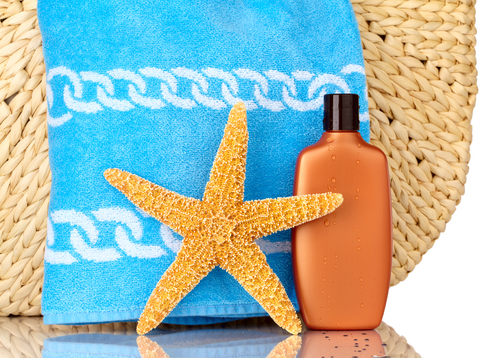
Keep Skin Beautiful

All though it's the end of the summer, the sun's rays can still penetrate through the clouds. In fact, there is still a chance of developing skin cancer even in the winter.

Here at The Thrifty Scholar we understand that there is a great deal of information regarding skin safety, and some of it can be confusing so we broke it down for you by answering some of the questions readers submitted.

Wednesday, August 24, 2011

Getting a Thrifty Sidekick: Planning for a Pet

First Daughter Malia Obama with Bo, a Portuguese Water Dog gifted from the late Senator Kennedy
Are you considering getting a dog?  What a big decision you have before you! There are so many different things to think about such as choosing from a panoply of breeds, where you will get your pet, and how to budget properly for your new family member. Clearly, this can be an overwhelming decision so let's try to break it down.


Monday, August 22, 2011

Rewards Cards: Playing the Plastic, and Winning!

Karen Chien is a doctoral candidate in Materials Science & Engineering at Northwestern University. She is also excellent at preparing DoFu Delight.

 I've always wondered what made one rewards credit card better than the other. I have one rewards credit card from Chase and another from Bank of America, and the extent of my knowledge was that I could treat myself to some "free money" every time I remembered to swipe that particular card.  This usually happens when I'm trying to buy a plane ticket to Malibu, since I frequently get tired of graduate school life and live fat and happily off of my generous stipend.

Rewards cards now offer cash back, air mileage, and points

First of all, the type of spender you are should influence which card you open:

  • Big spenders: These people can benefit from opening cards during promotional periods which provide high amounts of points upon initial purchases (>$1000).
  •  Balance-carriers: People who pay minimum monthly payments tend to carry balances. These people benefit from low APR’s as well as 0% intro APR, but would do better with just ONE regular low interest credit card. [Editor's Note: Many of the rewards cards have variable interest rates, which mean they can change at any time. Always read your terms of agreement carefully when opening a new card.]
  •  Pay-back people: Savers who tend to pay back cards in full each time  can go for higher bonus levels without as much regard for interest rates, but it is still good to have them in mind in case a sudden financial crisis were to happen and you couldn’t pay your bill on time.
  • Categorical spenders (people who like to spend money in a certain category such as travel, retail stores, etc.) could benefit from cards that have annual fees but offer higher rewards for spending within a particular category.  Extra calculations for point to dollar worth can be helpful here.

Friday, August 12, 2011

Skip the Hairdresser: Color Hair at Home Part 1

A trip to the hairdresser for a cut and color can easily cost over $100, especially if you get roped into buying their special products for resisting color fading. In contrast, at-home coloring kits are available at drugstores from $5-$20 and manufacturers often provide coupons for these products. 
Style icon Rhianna frequently dyes her hair vibrant shades of red

You are probably coloring your hair to hide greys, or to adjust the shade due to sun damage or a change in seasons. Coloring your hair at home is a good decision for minor color changes. It not only saves you money, it gives you more control over the results; you are selecting a dye with a chemical strength appropriate for your hair, you are taking care to make sure the application is thorough, and you are controlling the exact amount of time the dye remains on your hair.

[Disclaimer: If you are considering drastically changing your hair color (going from black to blonde) or have been previously color-treating your hair, you might want to seek a professional’s assistance because then you can blame someone else if it turns out horrible J]